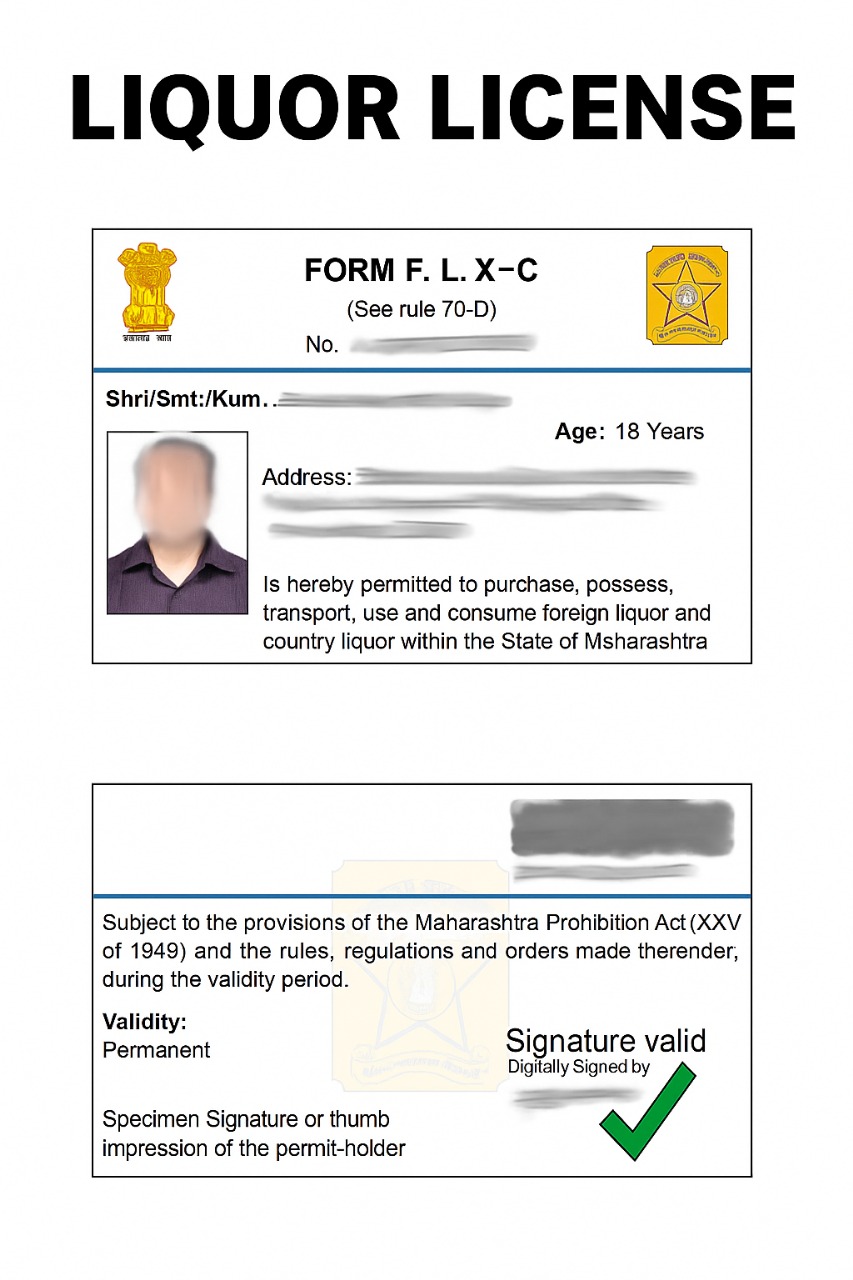




Liquor license

What is the definition of a liquor license?

In India, a liquor license is an official government permit that is necessary for the production, sale, distribution, or service of alcoholic beverages. To operate legally, it is essential for businesses such as bars, pubs, restaurants, liquor shops, and distributors to obtain this license. The license guarantees that alcohol-related activities adhere to state and central excise laws, thereby preserving public safety and regulatory control.

From a public policy perspective, liquor licensing ensures regulation of alcohol consumption, prevention of illegal trade, and control over underage drinking. It also empowers authorities to monitor quality standards, taxation, and distribution channels, thereby protecting both consumers and the state’s revenue interests. Licensed establishments are held accountable for compliance with safety, hygiene, and responsible service standards, which is especially crucial in hospitality and entertainment sectors.

For entrepreneurs, securing a liquor license provides market credibility and operational security. It allows businesses to legally expand operations, serve alcoholic beverages, and participate in the hospitality and retail sectors. Moreover, compliance with licensing laws enhances the brand reputation of establishments, builds customer trust, and ensures eligibility to participate in state-approved events or bulk supply contracts.

Key Topic Index

  • Liquor license
  • Significance of Liquor License
  • Benefits of Obtaining a Liquor License
  • Documents Required
  • Frequently Asked Questions (FAQs)
  • Why you should choose Make Merchant to register your business?
table content image

Significance of Liquor License

It is imperative to acquire a liquor license in order to comply with the legal regulations that govern the sale and service of alcohol. It safeguards business owners from legal repercussions, including the confiscation of stock, closures, or fines, for the unlawful sale of alcohol. The license also allows businesses to serve customers responsibly, while simultaneously promoting transparency, quality control, and tax compliance. The Excise Act penalizes the act of operating without a valid license.

  • Liquor License Types Liquor licenses are contingent upon the nature of the business and the extent of alcohol operations. Common categories consist of:
  • Retail Liquor License (L6): Permits the sale of alcoholic beverages in packaged form for consumption off the premises.
  • Hotel and Restaurant License (L-17, L-18): Authorizes licensed establishments to serve liquor on-site, including to hotel guests and restaurant patrons.
  • Wholesale License (L1): Permits license holders to distribute liquor to retail vendors or other licensed dealers.
  • CL-4 License (Country Liquor License): For the sale of locally brewed alcoholic beverages in rural and smaller towns.
  • FL-3 License (Foreign Liquor License): For high-end bars and restaurants that serve liquor from other countries.
  • L19 License: A license that is granted to private clubs for the purpose of serving liquor exclusively to members.
  • Temporary Licenses: For private parties, banquets, and events that have a limited duration

Benefits of Obtaining a Liquor License

  • Legal Compliance: Operating with a license safeguards against legal actions, fines, or shutdowns.
  • Increased Revenue: Alcohol sales often boost business profits given their high demand and profit margin.
  • Customer Trust: Licensed establishments attract more customers due to verified legality and responsible service.
  • Event Opportunities: Enables hosting private parties, weddings, and corporate events with legal alcohol service.
  • Market Expansion: Access to diversified beverage options including foreign brands and premium products.
  • Marketing Possibilities: License holders can organize tastings and promotional events enhancing brand presence.

Documents Required

  • A recent passport-sized photograph of the applicant
  • A valid form of identification (e.g., Aadhaar, PAN card, passport)
  • Proof of address (rental or lease agreement, utility bills)
  • Evidence of ownership or lawful possession of the premises
  • Detailed plan of the premises' layout
  • No Objection Certificates (NOCs) from municipal authorities and the fire department
  • Income Tax Clearance Certificate and the most recent income tax returns
  • affidavit certifying that the individual has no criminal history
  • Additional affidavits that verify compliance with excise laws.

Frequently Asked Questions (FAQs)

Indeed, it is unlawful and punishable by law to sell, distribute, or serve alcohol without a valid liquor license.

Liquor licenses are typically valid for one year and necessitate annual renewal.

Indeed, it may be necessary to obtain distinct licenses for the retail, wholesale, or restaurant service of alcohol, contingent upon the nature of your business.

Heavy fines, business closure, stock confiscation, and potential legal proceedings are among the penalties.

The majority of liquor licenses are not transferable; however, specific permissions may be necessary on an individual basis.

When you want to launch your business, Make Merchant is where it's at!

Make Merchant provides the lowest prices in India and simplifies the process of registering your business. Get in touch with us immediately for a no-cost consultation and assistance with the entire process.

logo

We are a one-stop solution for businesses that wish to grow and move from local to global

Contact Info

Office Address

Address: 308, 3rd floor, bheema complex, nirman vihar , east delhi, delhi 110092