


logo

Drug & Cosmetic License: Ensuring Compliance and Trust in Pharma & Cosmetic Industry

Exactly what is a drug and cosmetic license?

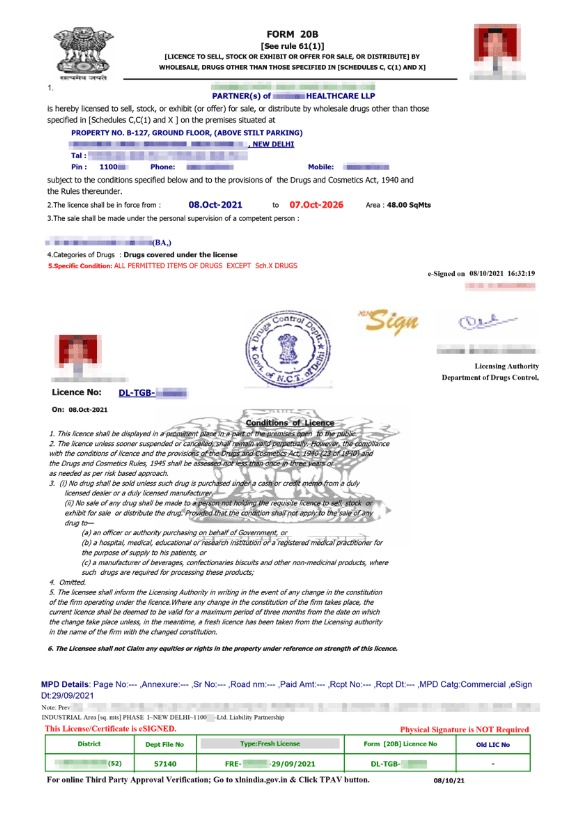
The Drugs and Cosmetics Act, 1940, mandates the issuance of a Drug & Cosmetic License, which is a legal authorization that enables businesses to manufacture, distribute, sell, or stock drugs and cosmetic products in India. This license guarantees that all pharmaceutical and cosmetic products adhere to the established safety, quality, and efficacy standards in order to safeguard public health. Operating in the drug and cosmetic sector is illegal and subject to legal penalties in the absence of this license.

The license also plays a pivotal role in business legitimacy and market access. It enables companies to operate within the legal framework, gain access to formal distribution channels, and participate in government tenders or institutional supply contracts. Furthermore, it provides an assurance to consumers, investors, and international buyers, signaling that the products are compliant with national regulations and globally recognized standards.

In addition, the regulatory framework governing the Drug & Cosmetic License promotes accountability, transparency, and ethical business practices. It encourages manufacturers to maintain proper documentation, quality control procedures, and Good Manufacturing Practices (GMP), fostering a culture of continuous improvement and innovation within the industry. This not only enhances product quality but also strengthens the overall credibility of the Indian pharmaceutical and cosmetic sectors in domestic and international markets.

Key Topic Index

  • Drug & Cosmetic License: Ensuring Compliance and Trust in Pharma & Cosmetic Industry
  • Significance of a Drug and Cosmetic License
  • Advantages of a Drug and Cosmetic License
  • Documents Required for Drug and Cosmetic License
  • Frequently Asked Questions (FAQs)
  • Why you should choose Make Merchant to register your business?
table content image

Significance of a Drug and Cosmetic License

The license is essential for the regulation of the pharmaceutical and cosmetics market in India. It guarantees that the drugs and cosmetics sold in the market are genuine, safe, and manufactured in accordance with rigorous quality control standards, thereby protecting consumers. In addition, the Drugs & Cosmetic License assists authorities in the monitoring and prevention of the distribution of substandard or adulterated products to consumers, thereby safeguarding public health and safety.

Additionally, the drug license establishes the legal and ethical credibility of a business, ensuring the legitimacy and reliability of the products offered, thereby fostering trust and confidence in the marketplace. This reassures customers and business partners.

Advantages of a Drug and Cosmetic License

  • Legal Compliance: Necessary for the legal execution of operations concerning cosmetics and pharmaceuticals.
  • Consumer Trust: Demonstrates a dedication to maintaining safety and quality standards.
  • Market Access: Facilitates participation in government tenders, pharmaceutical supply chains, and exports.
  • Business Credibility: Improves the reputation of the organization among stakeholders, customers, and distributors.
  • Protection from Penalties: Prevents the imposition of fines, the closure of businesses, and the legal repercussions associated with the illegal sale or manufacture of cosmetics and drugs.
  • Quality Assurance: Ensures that consumers are provided with safe and effective cosmetics and medications.
  • Scaling Business Operations: Facilitates the expansion of business operations by obtaining recognized licenses for various product categories and multiple locations.

Documents Required for Drug and Cosmetic License

Several critical documents are required to obtain a Drug & Cosmetic License, which are specific to the type of license being applied for (such as manufacturing, wholesale, retail, or import):

  • Certificate of Business Incorporation (Proprietor/Partner/Company)
  • Proof of Premises (Electricity Bill, Property Tax Document, or Ownership or Lease Agreement)
  • Proprietor/Partner/Director Identity Proof (PAN Card, Aadhaar Card, Voter ID)
  • List of Cosmetics or Drugs to be Manufactured or Sold
  • Technical staff qualifications and details (qualified chemist or pharmacist)
  • The premises' layout and site master plan
  • Manufacturing process flowchart (for manufacturers)
  • Cosmetic product composition, formulation, and label samples
  • Affidavit concerning the business owner(s)'s non-conviction
  • Financial statements and bank account information, if applicable.

Frequently Asked Questions (FAQs)

No. The Drugs and Cosmetics Act, 1940, imposes penalties for the illegal sale, stocking, or distribution of drugs and cosmetics.

Each license is contingent upon the nature of the business operations, including manufacturing, wholesale, retail, import, and loan licenses.

The license is typically valid for five years from the date of issuance and can be renewed prior to its expiration.

Indeed, the majority of drug licenses require the presence of a qualified pharmacist or competent technical staff, particularly for retail and wholesale operations.

Indeed, the Drugs and Cosmetics Act has specific manufacturing and selling licenses for Ayurvedic, Siddha, Unani, and homeopathic drugs.

When you want to launch your business, Make Merchant is where it's at!

Make Merchant provides the lowest prices in India and simplifies the process of registering your business. Get in touch with us immediately for a no-cost consultation and assistance with the entire process.

logo

We are a one-stop solution for businesses that wish to grow and move from local to global

Contact Info

Office Address

Address: 308, 3rd floor, bheema complex, nirman vihar , east delhi, delhi 110092