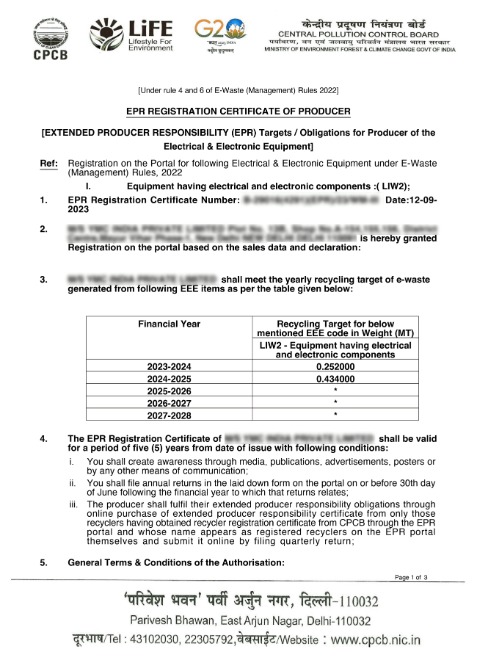
EPR Registration Online - Overview
If your business deals with plastic packaging, e-waste, batteries, tyres, or other regulated products, then EPR Registration may be a mandatory compliance for you.
EPR (Extended Producer Responsibility) is a government compliance system that makes Producers, Importers, and Brand Owners (PIBOs) responsible for the waste generated from the products they introduce into the market.
In simple words, if your business is selling or importing products that create waste after use, you are expected to ensure that this waste is managed in an environmentally responsible way.
This includes proper collection, recycling, disposal, and waste management as per the guidelines issued by the Central Pollution Control Board (CPCB) and the respective State Pollution Control Boards (SPCBs).
At Make Merchant, we help businesses complete the EPR Registration process smoothly and professionally, without unnecessary confusion or delays. From documentation to filing and compliance guidance, our team supports you at every stage.
What is EPR E-Waste Registration?
EPR E-Waste Registration is a mandatory environmental compliance for businesses involved in the manufacturing, importing, selling, or branding of electrical and electronic equipment (EEE) in India.
Under this registration, businesses are required to take responsibility for the e-waste generated from their products after use. This means they must ensure that the waste is properly collected, recycled, refurbished, or disposed of in an environmentally safe manner.
The registration is granted by the Central Pollution Control Board (CPCB) under the applicable E-Waste Management Rules.
In simple terms, EPR E-Waste Registration ensures that producers, importers, and brand owners manage the end-of-life waste of electronic products in a responsible and legally compliant way.
This registration is important not only for legal compliance, but also for promoting sustainable business practices, responsible recycling, and environmental protection.